
Our Origin Story
In February 2001, representatives from federal, tribal, first nation, state, and provincial agencies gathered at a workshop hosted by the Waterton-Glacier International Peace Park. The goal of the workshop was to explore ways of collaborating on shared environmental issues in the Crown of the Continent - an ecosystem that spans many agency jurisdictions. The Miistakis Institute for the Rockies facilitated the discussion and acted as a neutral third party. Throughout the workshop, participants outlined a set of concerns that needed to be addressed collaboratively across the landscape:
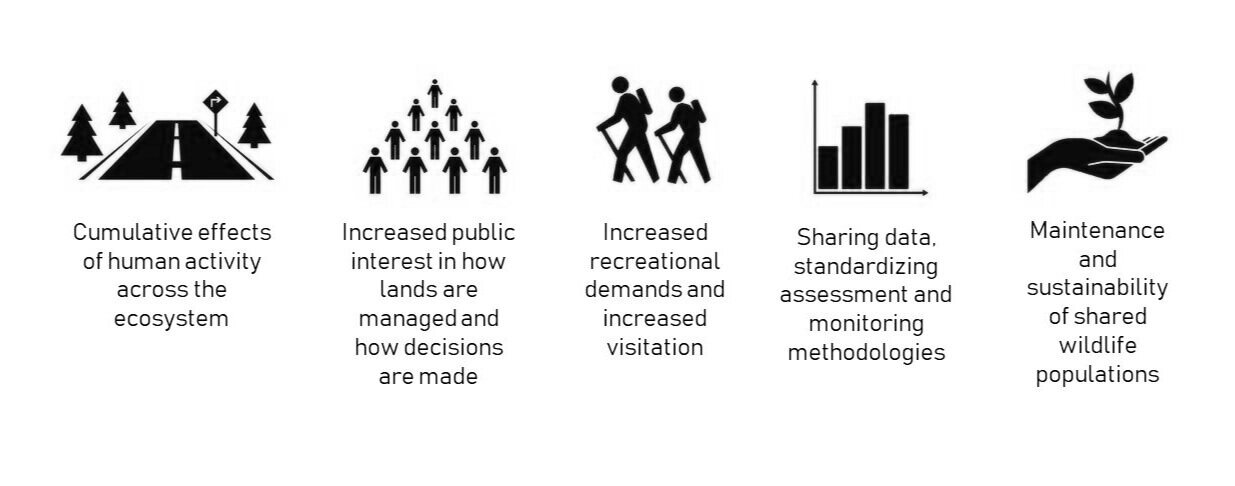
To effectively address these concerns and help guide operations, a Steering Committee was formed.
The following year, the group was formalized as a collaborative partnership called the Crown Managers Partnership (CMP). In 2007 the CMP was formalized even further when the governments of the State of Montana and Alberta signed a Memorandum of Understanding (MOU) recognizing the CMP. With officials from the Confederated Salish & Kootenai Tribe and the Ktunaxa Nation as witnesses, British Columbia and Montana’s governments signed an MOU in 2010 to collaborate on climate. While the CMP is not specifically mentioned in this MOU, the CMP certainly meets its intent.
Since 2001, the CMP has operated under two versions of a Strategic Framework. The first version was developed in 2006 and then revised in 2011. The original goals of the CMP still remain at the heart of the Strategic Framework. The CMP is currently operating under the direction of the Strategic Conservation Framework (2026-2030).
OUR GUIDING PRACTICES
Initially convened in 2001 by resource managers from the Province of Alberta, British Columbia, and Waterton-Glacier International Peace Park, the CMP has adapted in the face of evolving science and new challenges. In 2007 the CMP was formalized even further when the governments of the State of Montana and Alberta signed a Memorandum of Understanding (MOU) recognizing the CMP. With officials from the Confederated Salish & Kootenai Tribe and the Ktunaxa Nation as witnesses, British Columbia and Montana’s governments signed an MOU in 2010 to collaborate on climate. While the CMP is not specifically mentioned in this MOU, the CMP certainly meets its intent.
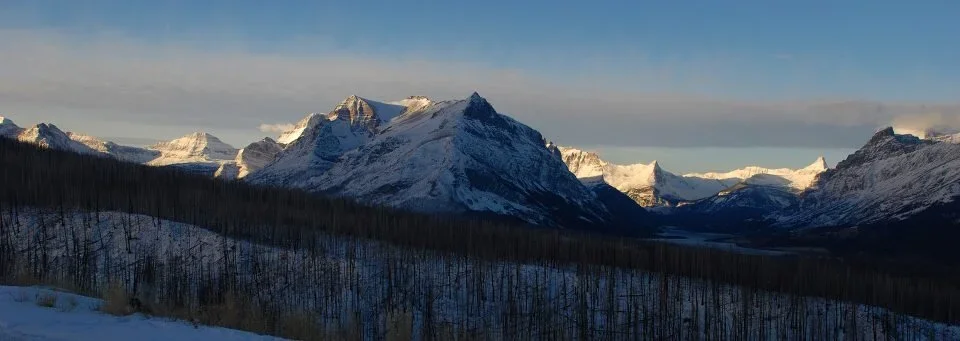
Our efforts have grown beyond our initial convening to establish a common transboundary database of ecological metrics in the Crown of the Continent Ecosystem (CCE). With an expanded partnership and a greater understanding of the landscape and how it is evolving, we continue to address emerging issues like invasive species, five needle pine restoration, and climate change. Our work is guided by a Strategic Conservation Framework, which is updated every five years.